


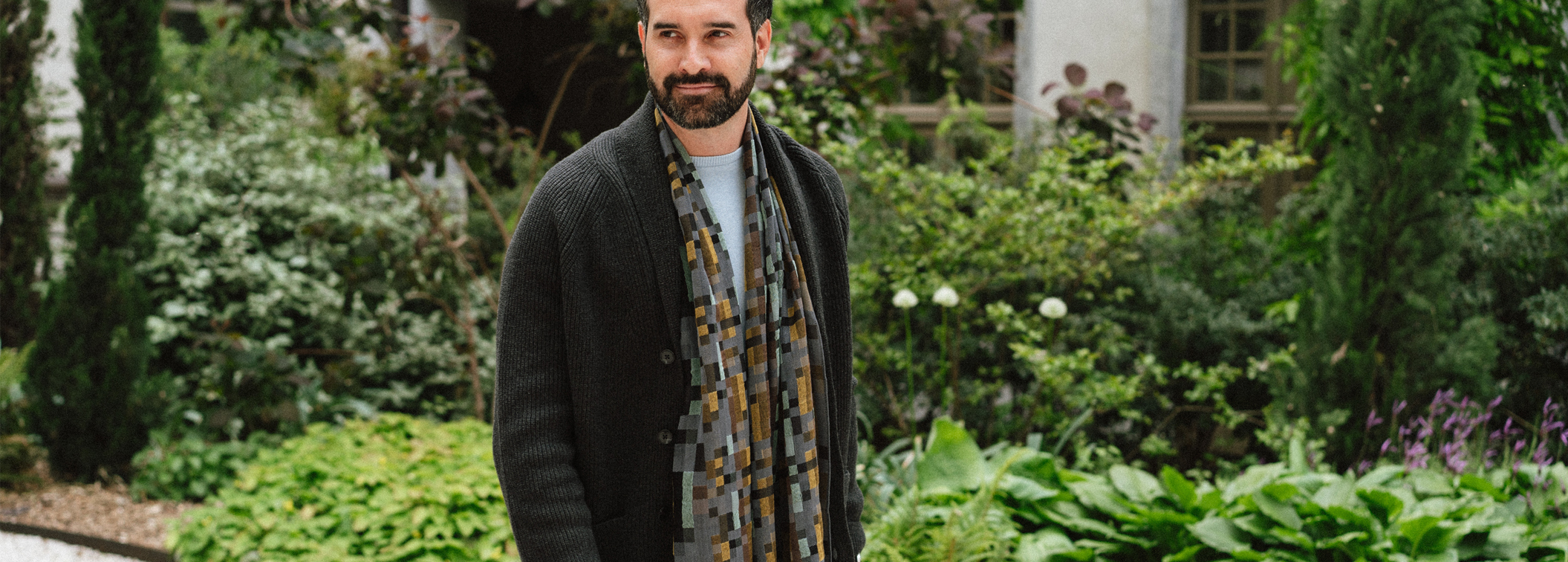
The different types of wool scarves: styles, colors, and patterns
We can discern a wide variety of wool scarves, which differ by their style, color, and pattern. The scarf you pair with your outfit can define your look, and can easily be adapted to the season, event, and your budget.
Some wool scarves will add a casual touch to your look, while others will make you look more chic or more refined. It’s also important to choose a scarf based on the season. Naturally, you need a warm scarf for the winter, and lighter scarves for mid-season. You have to carefully consider what colors and patterns will pair with your outfits and enhance your look.
The properties of wool
Wool scarves are renowned for their comfort and warmth. A beautiful natural material, wool possesses many special properties: it locks in air to protect you from the cold, has great thermal insulation power for both winter and summer, is easy to maintain, dust-resistant, antimicrobial, very durable, naturally flexible, completely biodegradable, and flame resistant.

The different kinds of wool scarves
We can categorize wool scarves using several different categories:
The type of wool used and the percentage of wool used in a blend
The scarf’s thickness, shape, and dimensions
The scarf’s color scheme and pattern
Different kinds of wool scarves by wool type
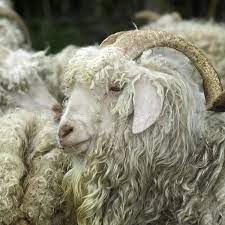
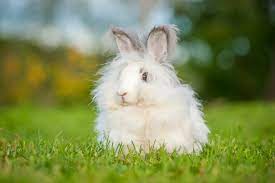
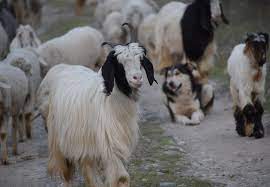
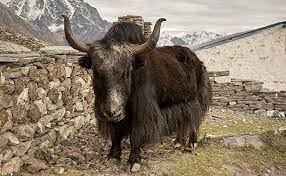
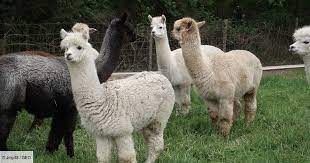
Wool can come from several types of animals. Most wool comes from sheep, with different breeds, such as Shetland and Merino, producing different varieties of wool. Wool also often comes from goats, likewise with different breeds, like Angora and Cashmere, producing their own special wools. Lastly, wool can be made from rabbits, alpacas, and yaks.
The quality of wool is measured by something called micronnage, which tells us how soft a particular wool is.
Micronnage is the measurement of the diameter of the fiber a thread of wool yarn is made of, and is the diameter of the hair taken from the given animal. For example, a typical hair is about 100 microns. The smaller the diameter, meaning, the smaller the micronnage, the softer the wool. A wool with a micronnage greater than 28 is generally prickly to the touch for most people. A wool with a micronnage below 25 microns is not at all scratchy. Thus, wools can be classified by their micronnage. Generally speaking then, the lower the micronnage, the more beautiful and expensive a particular wool will be. Merino wool, at 23 microns, is around $25 per pound (€50 per kilogram) while cashmere wool, at 16 microns, can go up to $100 per pound (€200 per kilogram). If a wool-producing animal is more rare, its wool will likewise be more expensive, while the wool of more common animals will naturally be cheaper.
Merino: the highest quality sheep wool
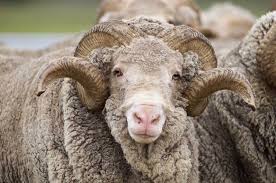
Merino wool: Merino wool comes from the Merino breed of sheep and it is the softest sheep’s wool in the world. It is composed of very fine fibers whose diameter varies between 20 and 23 microns. La Fabrique d’écharpe uses only Merino wool in our scarves and stoles.
Below is the micronnage of wool from different breeds of animals:
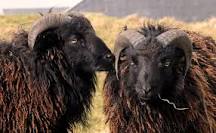
Ouessant sheep: 25-28 microns
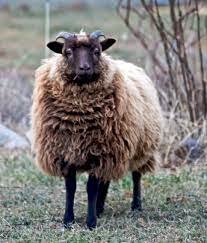
Shetland sheep: 27-30 microns
Merino sheep: 20-23 microns
Angora goat: 22-28 microns for kid-mohair and 30-40 for adult goats
Angora rabbit: 11-16 microns
Cashmere goat: 12-16 microns
Yak: 16-20 microns
Alpaca: 14-23 microns for baby alpaca and 23-27 for adult alpaca
Fabric composition
Many scarves on the market are sold as “wool scarves,” but are actually not 100% wool. In general, a scarf can be sold as a wool scarf if its composition contains more than 50% wool. Wool is often paired with other natural materials such as silk, cotton, or even cashmere. In the 1970s, a wool/acrylic blend was very popular for scarves. Today, however, acrylic has given way to rayon, an innovative material derived from wood cellulose that is prized for its softness. Of course, the more wool there is in your scarf, the warmer it will be, but also the more expensive.
Thickness, shape, and dimensions
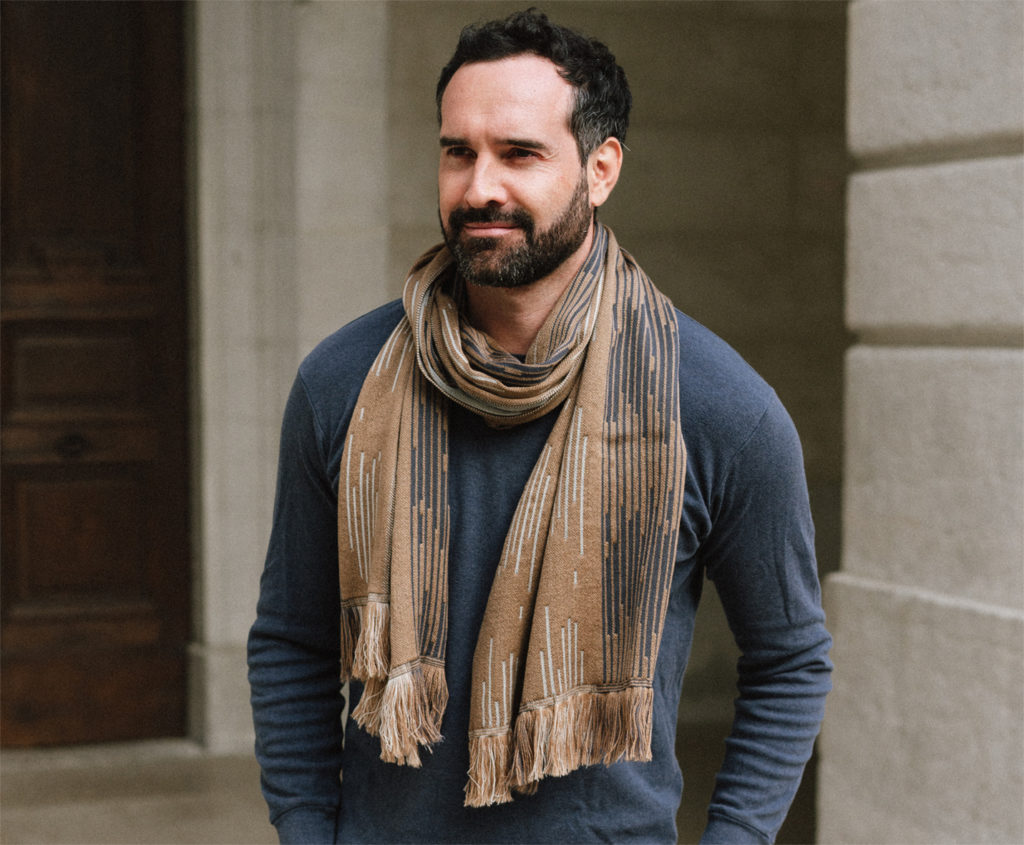
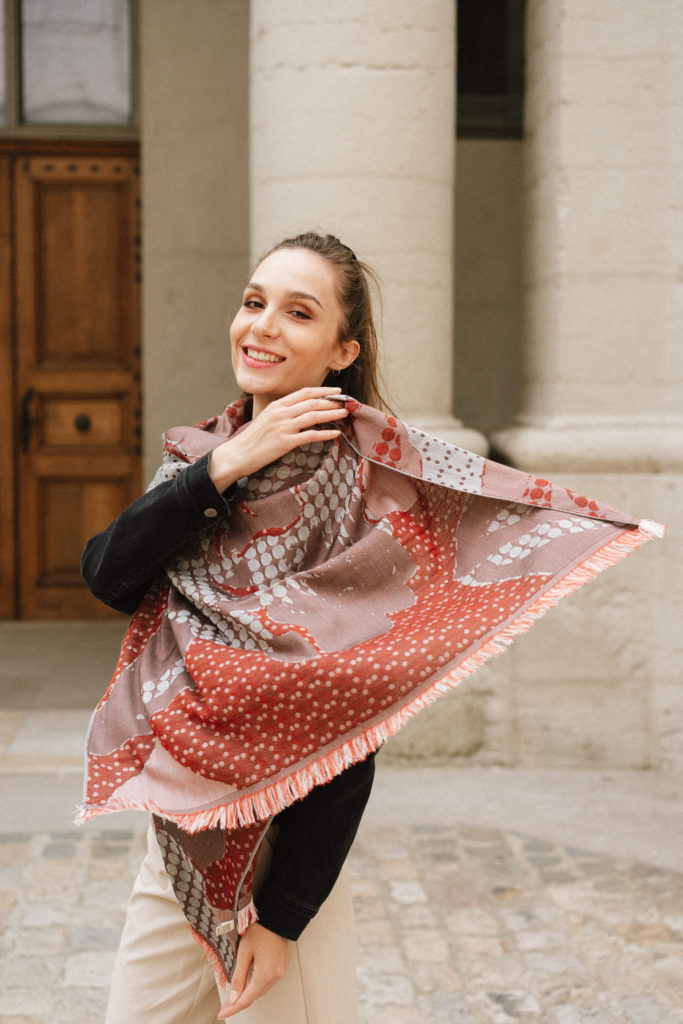
There are a multitude of scarves on the market, of varying levels of thickness and in different dimensions. Depending on your tastes, you can choose between a large thin stole or a small thick scarf, both with the same comfort. If you are tall, you should choose larger dimension scarves. The sizes and shapes of scarves also vary with fashion trends and have also changed over the decades. Here are some examples:
A wool scarf knitted by your grandmother in the 1960s
A small scarf measuring 19.6x63in (50x160cm) made of a wool/acrylic blend from the 1970s
A large fine, airy stole measuring 27.5×78.7in (70x200cm) made of a cashmere/silk blend from the 2000s
Triangle-shaped wool/silk blend stoles
A big, thick square wool scarf measuring 63x63in (160x160cm) featuring a Scottish plaid motif
A 31.5×74.5in (80x190cm) wool/cotton blend scarf for both men and women
A snood, a very practical circular scarf for children.
Colors and designs:
An infinite number of colors and designs are possible. However, there are four main categories:
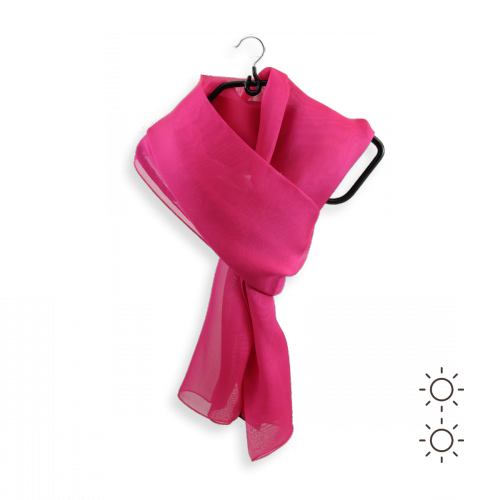
Category 1: Monochrome wool scarves
These are single color scarves without any pattern. They are very easy to wear, you only have to choose a color that matches your outfit. Either choose a color that complements your outfit, or use a scarf to create contrast. A bright colored scarf can give your look a real boost.
Category 2 : Printed scarves
Printed scarves feature a pattern made using textile printing, the process of applying color to plain fabric in different designs and patterns, much like a print on paper.
Category 3: Jacquard scarves
Jacquard weaving is La Fabrique d’écharpe’s speciality! A Jacquard weave is a pattern made by the perpendicular interlacing of colored threads called the warp and the weft threads. The images created are visible on both sides of the scarf. This type of weaving adds depth and visual interest, and is perfect for wool. Wool yarns perform very well on Jacquard looms. La Fabrique d’écharpe has its own Jacquard looms!
Category 4: Knitted scarves
These are scarves knitted on machines, with a result similar to hand-knitted scarves.
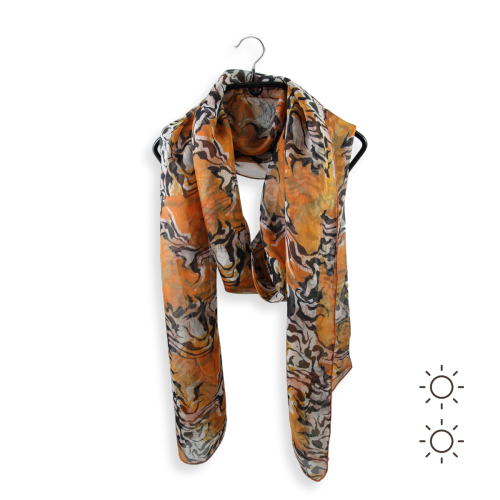
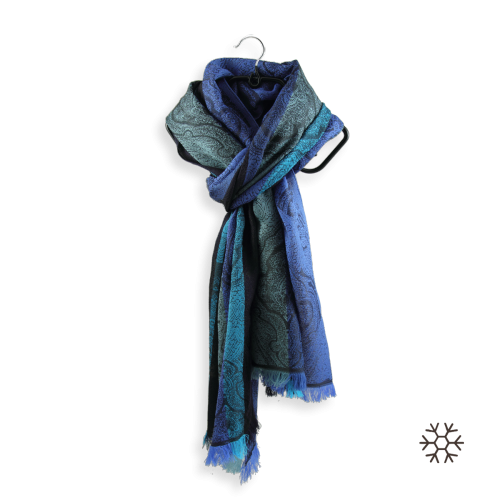
Patterns
Scarves can be made in a very wide variety of patterns, which can be realized using digital printing either with a Jacquard or knit weave. We can classify scarf patterns into four groups:
Geometric drawings:
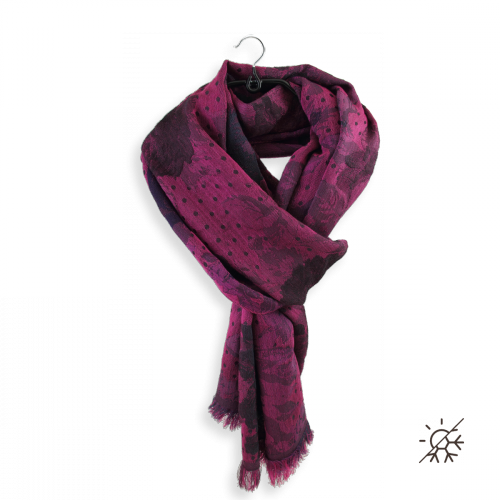
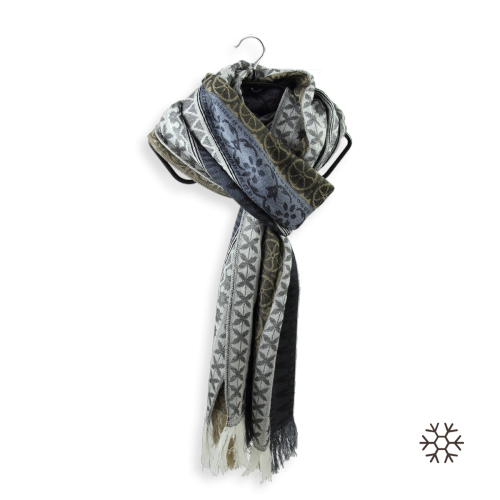
Checks, plaids, polka dots, satin stitches, chevrons, stars, waves, and optical illusion designs
Floral designs:
Widely used in textile design, this category includes stylized renditions of flowers, plants, paisley, cashmere, animals, arabesques, and medallions
Abstract drawings:
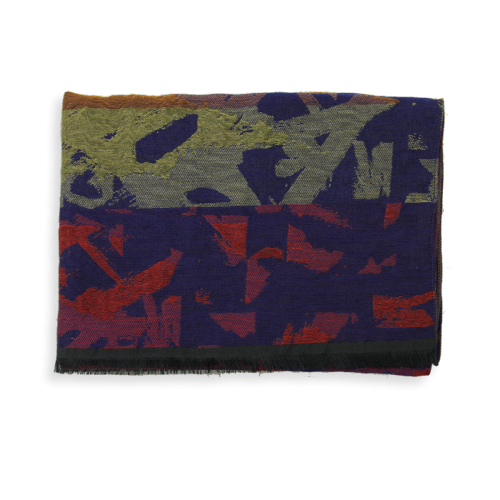
Abstract shapes in multi-colors, two-tone lines, revisited elements of nature, and imaginary designs
Stripes:
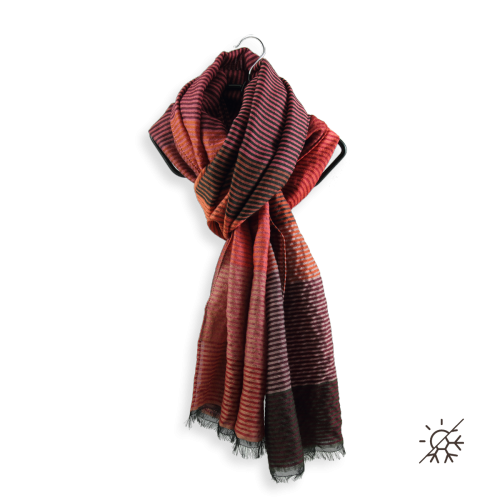
All kinds of stripes, including regular, irregular, and friezes placed over multicolored stripes
Here are some examples:
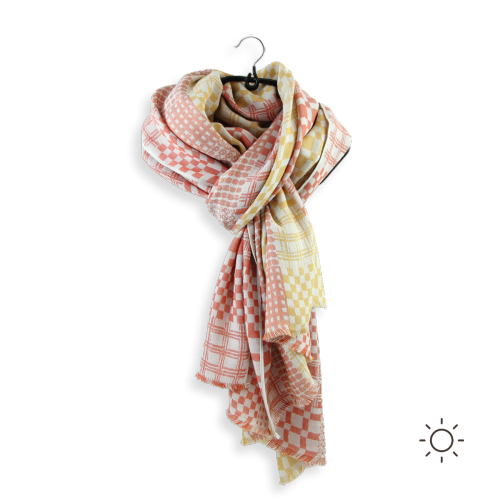
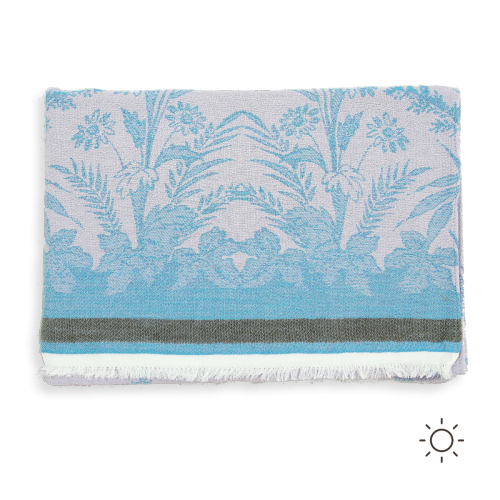
A bit about finishes
In general, wool scarves have fringes at the bases and hems along the lengths. They have either small sweeping fringes of 1-2 cm or larger ones up to 10-15cm. Longer fringes add a more relaxed touch to your look. Some scarves do not have fringes at the base but instead have small fringes along the lengths of the scarf, creating a more original finish. Other scarves are hemmed all around, these are often square scarves. Additionally, there are obviously other, more original finishes available out there.
A wide variety
Be careful and choose your wool scarf carefully! Some wool scarves out there are very scratchy because the wool’s micronnage is too coarse. Depending on the seasons, trends, and your budget, you can choose larger or smaller scarves, squares or triangles. In addition, you will love the huge choice of designs available. If you are unsure, a wool scarf with a neutral color like grey, beige, navy, or black pairs with most outfits. A wool scarf also makes a great gift. There’s something for everyone, a great idea for Christmas, a birthday, or a party !

Write to us